Echo of Seto Islands
✨
✨
Nominated for VRINN Awards (Hamar UNESCO City of Media Arts category)
✨
✨
Nominated for Design Dispatch Future Forward, Spring 2026 season
The project began with a question that emerged during field research across the islands of the Setouchi Triennale. While the festival attracts visitors from around the world, many children may never have the opportunity to experience its artworks, landscapes and stories in person. Rather than attempting to recreate the event digitally, I explored how its emotional and cultural significance could be translated into an entirely new interaction experience.
The result is a storybook-like virtual world inspired by Oshima Island, one of the islands in Japan’s Seto Inland Sea. Once associated with the isolation of patients affected by Hansen’s disease, Oshima’s history became the starting point for a story about memory, exclusion, resilience and care.
The experience was informed by conversations with educators and caregivers, as well as iterative testing that helped shape the project’s approach to accessibility, storytelling, and engagement.
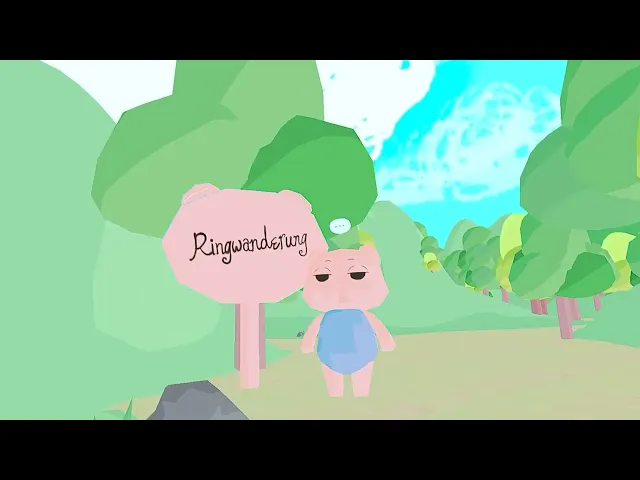
Visually, the project combines hand-painted textures created in Procreate with low-poly environments developed in Blender and Unity. The experience adopts a storybook-like visual language that balances playfulness with reflection.


The VR experience was presented in a small-scale public exhibition setting on 25 August 2025, where participants were invited to interact directly with the system.
This enabled observation of real user interaction behaviour, including how users navigated the environment, interacted with narrative elements, and responded to the design structure. The presentation validated the usability and accessibility of the interaction design in a live system.